Does 316 Stainless Steel Rust? 304 vs 316
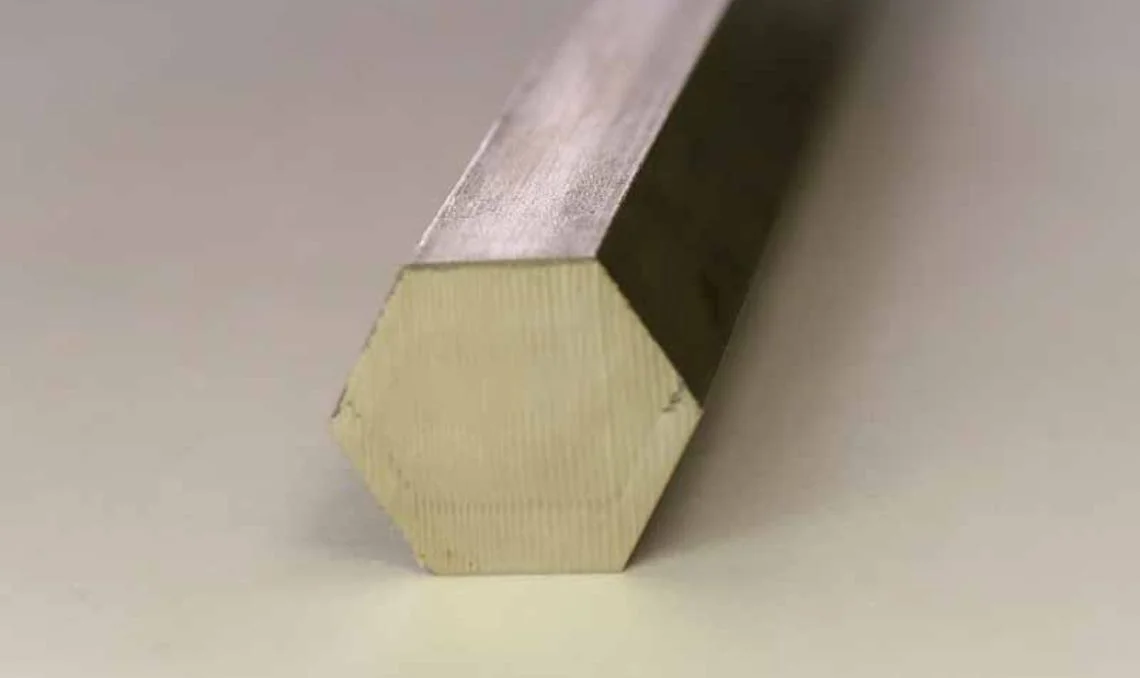
In our previous article, 304 vs 316, we looked at the key differences between these two stainless steel grades and why the addition of molybdenum gives Grade 316 greater resistance to certain forms of corrosion. But that comparison raises a few more questions.
Does stainless steel actually rust? Is 316 stronger than 304? In addition, we need to address the misconception that 316 is commonly described as “marine-grade stainless steel” Does that mean it won’t corrode in saltwater?
In this article, we aim to explain an important principle for selecting stainless steel: there isn’t a single grade that’s automatically right for every job.
Does stainless steel rust?
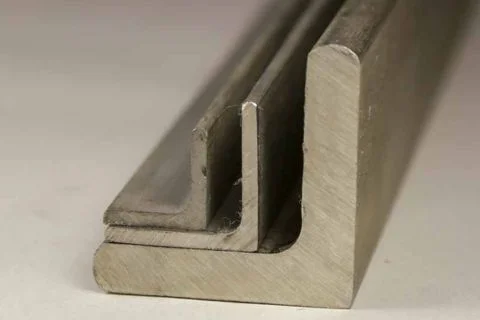
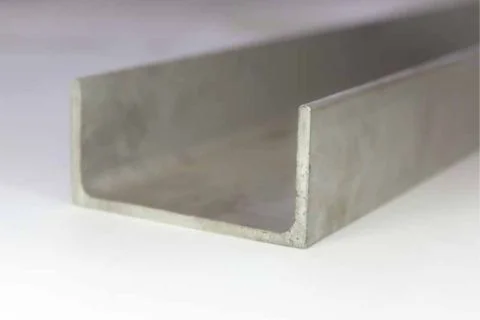
Stainless steel is a sought-after material because, strictly speaking, it doesn’t rust; however, it is not immune to corrosion. As we explained in our previous article, stainless steel contains chromium, which reacts with oxygen to form an extremely thin protective oxide layer on its surface. This passive layer helps prevent the underlying metal from corroding and can reform when damaged if suitable conditions exist. However, the passive layer can be compromised.
Exposure to chlorides, aggressive chemicals, high temperatures, surface contamination and environments where moisture becomes trapped can all contribute to corrosion. Poor design, inappropriate surface finishes and inadequate maintenance also affect how stainless steel performs. This means both 304 and 316 stainless steel can corrode.
The important difference is that 316 provides enhanced resistance to some forms of corrosion, particularly in chloride-rich environments.
Why is 316 called marine-grade stainless steel?
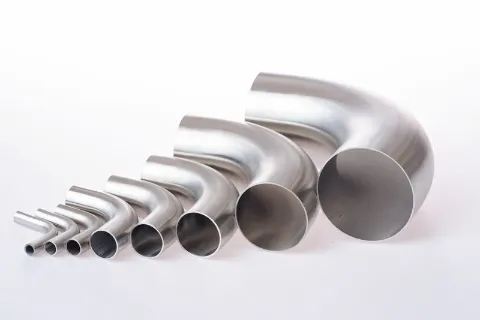
The term “marine grade” is commonly associated with 316 stainless steel due to its molybdenum content. However, this is misleading. Grade 316 typically contains around 2–3% molybdenum, which improves resistance to pitting and crevice corrosion caused by chlorides.
As saltwater contains high concentrations of chlorides, 316 will generally perform better than 304 in coastal and marine environments. The term “marine grade” can create the impression that 316 is immune to saltwater corrosion. It isn’t.
Seawater is a demanding environment for stainless steel. The performance of 316 depends on factors including chloride concentration, temperature, oxygen availability, surface finish, component design, maintenance and whether the material is continuously exposed or submerged.
A 316 stainless steel handrail installed near the ocean, for example, faces very different conditions from a stainless steel component permanently submerged in seawater.
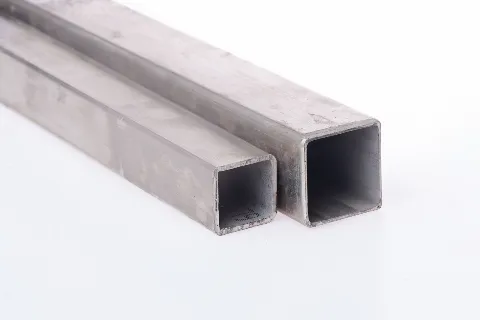
How can 316 stainless steel corrode?
Firstly, Grade 316 stainless steel can corrode, and there are terms for how and why it does so. Pitting corrosion. This happens when the passive layer breaks down in small, localised areas. Chlorides attack weaknesses in the passive layer, creating small pits in the metal surface.
Crevice corrosion. Narrow gaps where moisture and contaminants become trapped, and oxygen availability is reduced. Areas such as joints, washers, fasteners and deposits on the steel can create these conditions.
Galvanic corrosion can become a concern when stainless steel is electrically connected to another metal, and both are exposed to an electrolyte such as seawater. Material combinations and component design need to be considered rather than assessing the stainless steel in isolation.
Surface contamination can also cause problems. Carbon steel particles introduced during cutting, grinding, fabrication, transport or handling can become embedded in the stainless steel surface and subsequently rust, creating the appearance that the stainless steel itself is rusting.
Not strictly considered corrosion, however, tea staining is a familiar brown discolouration sometimes seen on stainless steel in coastal environments. Tea staining is generally a cosmetic issue. Selecting, or better still, getting the right advice on your stainless steel grade, surface finish, and regular maintenance will help reduce it.

Is 316 stainless steel stronger than 304?
It is normal to assume that because 316 costs more and provides greater corrosion resistance, it must be stronger than 304. That’s not necessarily the case.
304 and 316 have broadly similar mechanical properties, and both provide useful combinations of strength, ductility, formability and weldability. The primary reason for selecting 316 rather than 304 is its improved corrosion resistance, not its increased strength.
If strength is a requirement for a project, material selection should consider the mechanical properties, product form, condition, loads and relevant engineering specifications. We urge you to seek the right advice and be aware that a higher stainless steel grade number does not necessarily indicate a stronger material.
Why does grade 316 cost more than 304?
We’ve mentioned a few times that 316 and 304 stainless steel are similar in composition, so why does grade 316 cost more? The simple reason is the alloy content, the molybdenum and the higher nickel content.
If the project environment doesn’t require additional corrosion resistance, specifying 316 may increase material costs without delivering a meaningful advantage.
The reverse can also be true.
Selecting 304 because it is initially cheaper can prove to be a false economy if the environment exposes it to conditions for which it isn’t suited. Increased cleaning and maintenance, premature deterioration, or eventual replacement can outweigh the original savings.
Rather than asking whether 316 is “worth” the additional cost, a better question is: Does the application require the properties you’re paying for?
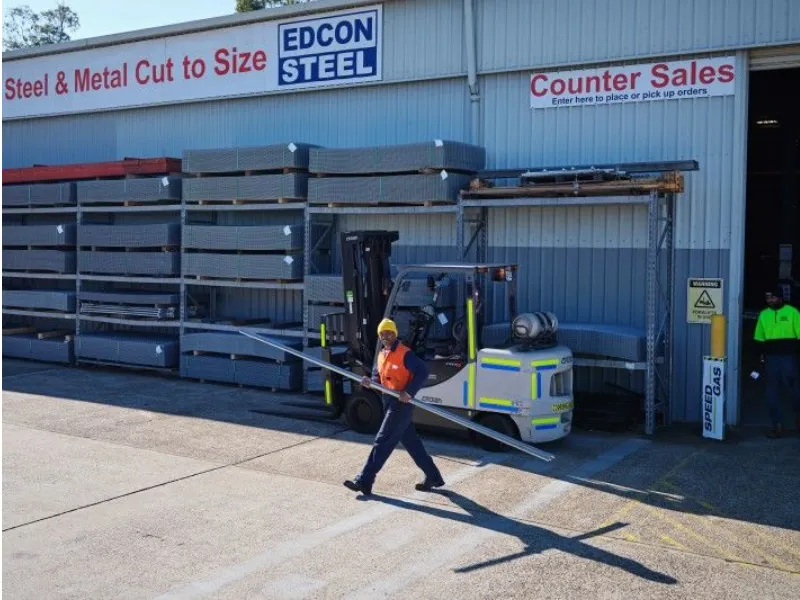
Stainless doesn’t mean indestructible
Stainless steel, whether 304 or 316 grade, does have its limits. Rather than assuming it won’t rust, the better approach is to assess its corrosion resistance.
304 provides excellent performance across a range of general applications. 316 adds greater resistance to chloride-related corrosion. Choosing between them starts with understanding the conditions the steel will actually face.
Salt, chemicals, temperature, moisture, fabrication, surface finish, component design and maintenance can all affect performance. Consider those factors first, and the grade designation becomes much more meaningful.
Our team can help you buy the right stainless steel option for your project. Contact your local Edcon Steel Depot for helpful advice. You can order online and pick up, or we can deliver to your site.
Need 304 or 316 for your next job?
Browse Edcon Steel’s range of stainless steel online. Custom cutting, click-and-collect and delivery available across Australia. Buy online or speak with the team at Brookvale, Blacktown, Revesby, Bathurst or Orange. for practical help in finding the right product.
FAQs
Can 316 stainless steel rust or corrode?
316 stainless steel is highly corrosion resistant, but it is not corrosion-proof. Chlorides, chemicals, trapped moisture, contamination and harsh environmental conditions can compromise its protective passive layer and lead to corrosion.
Why is 316 stainless steel called marine-grade stainless steel?
316 is commonly called marine-grade stainless steel because its molybdenum content provides greater resistance to chloride-related corrosion than 304. However, the term does not mean 316 is immune to corrosion in coastal or saltwater environments.
Is 316 stainless steel suitable for use near the ocean?
316 is generally better suited to coastal environments than 304 because of its increased resistance to chlorides. Its performance still depends on factors including proximity to saltwater, surface finish, design, exposure, cleaning and maintenance.
Is 316 stainless steel stronger than 304?
Not necessarily, as 304 and 316 have broadly similar mechanical properties. The main reason for choosing 316 over 304 is usually its enhanced corrosion resistance rather than greater strength.
Why is 316 stainless steel more expensive than 304?
316 generally costs more because it contains molybdenum and typically more nickel than 304. Whether the additional cost is justified depends on the environment and the level of corrosion resistance required for the application.
Can Edcon Steel help me choose and order 304 or 316 stainless steel?
Yes. Edcon Steel can provide practical product advice to help you identify suitable stainless steel for your application, with 304 and 316 products available to order online with custom cutting, click-and-collect and delivery options.
Steel in Action: Projects & Know-How


17 June 2026 / Edcon Team
David’s Steel and Metal Creations
Long-time Edcon Steel customer and full-time farmer, Justin Press, has carved out a unique niche restoring antique wood-fired stoves to better-than-new condition.
Read More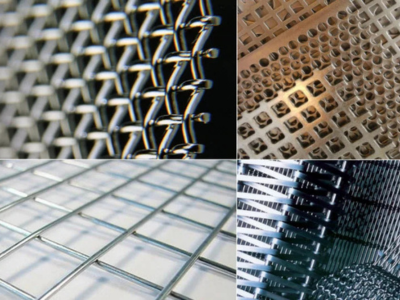
21 August 2026 / Edcon Team
Guide to Steel Mesh and Perforated Products
At Edcon Steel, we stock a wide range of welded steel mesh, woven steel mesh, expanded steel mesh and perforated steel for builders, fabricators, tradies, manufacturers, and DIY customers.
Read More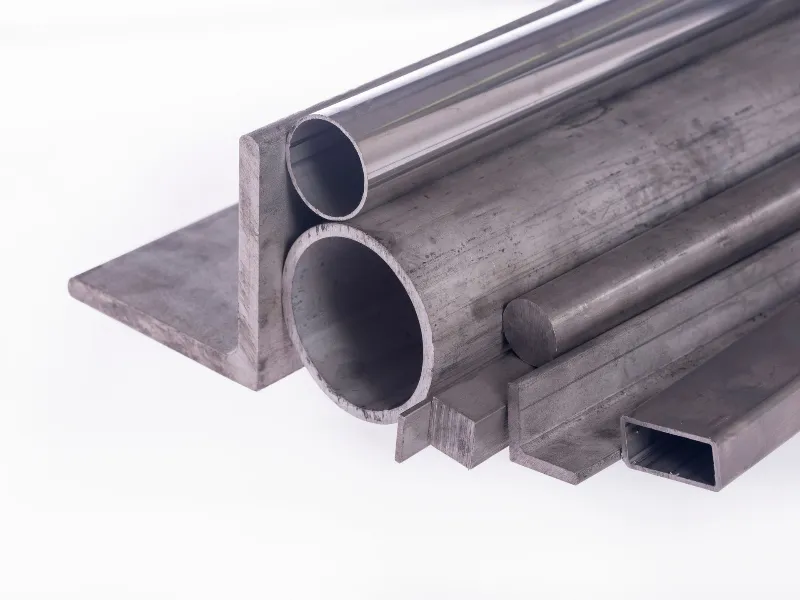
22 September 2026 / Edcon Team
304 vs 316 Stainless Steel: Key Differences
<span style="font-weight: 400;">Steel tube are a practical choice for everything from building frames to furniture and architectural work. Here, we explore the key considerations when deciding between RHS, CHS, and RHS.</span>
Read More
Ready to Get Steel Your Way?
Store locations
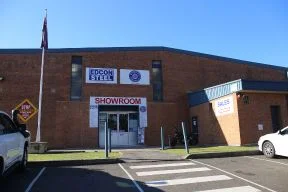
Brookvale
Learn More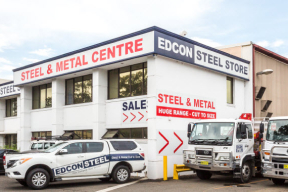
Revesby
Learn More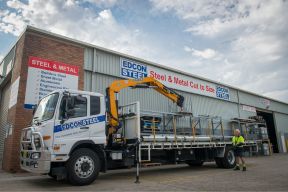
Blacktown
Learn More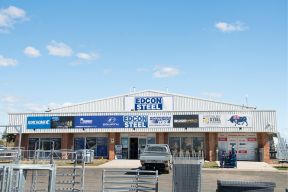
Bathurst
Learn More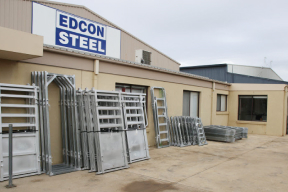
Orange
Learn More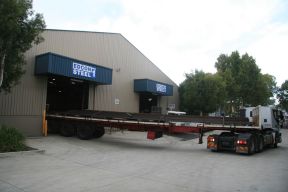
Brookvale Head Office
Learn MoreLeading brands