304 vs 316 Stainless Steel: Key Differences
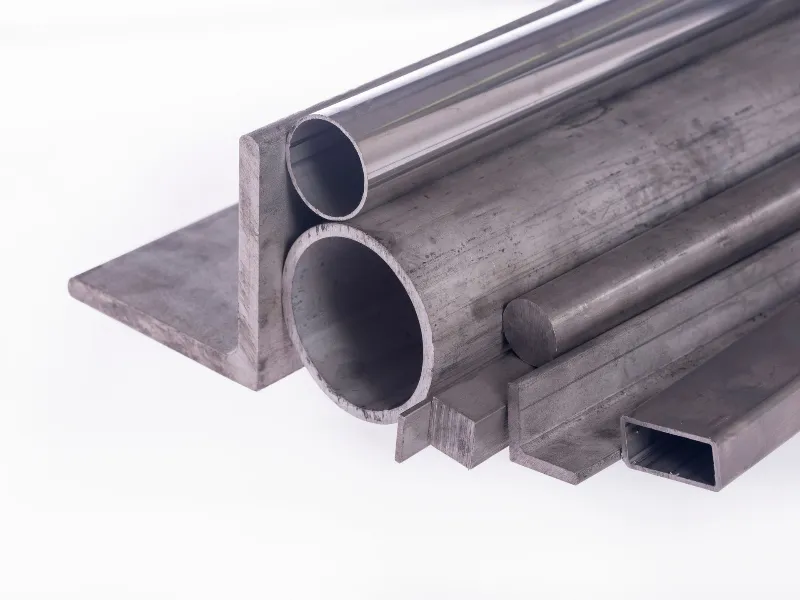
We’re a steel company, so we write a lot about steel. Most of our articles are designed to help customers understand the product, identify the best fit for their project, and see how we can help bring a project to life through honest advice, transparent and optimised pricing, and the convenience of our click-and-collect or delivery services.
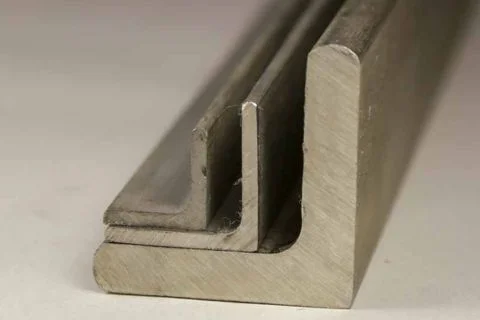
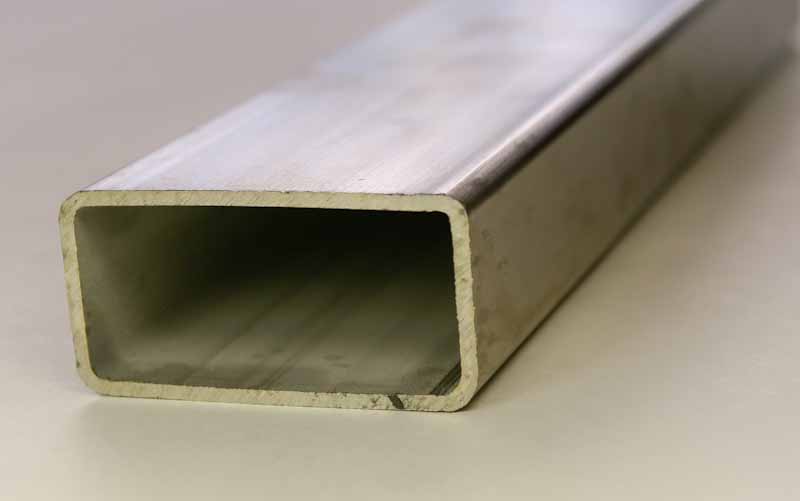
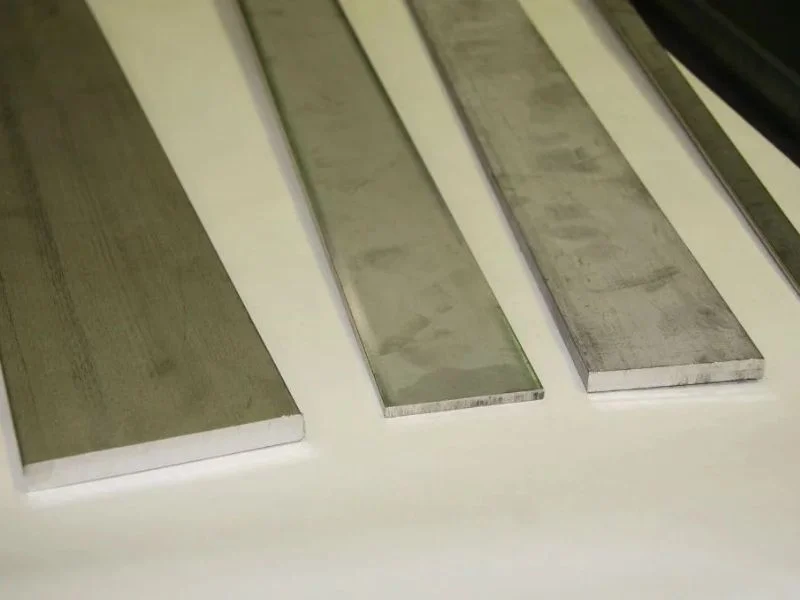
Answering questions and solving problems is a big part of what we do. One of the most common questions we hear is “What is the difference between 304 and 316 stainless steel?” And it is a fair question. On the surface, the products look pretty much identical; their primary composition means they can be fabricated into many of the same products, and both provide excellent corrosion resistance compared with ordinary carbon steel.
So why would you use 304 instead of 316 or vice versa?
The answer is relatively straightforward
Stainless steel grade 316 contains molybdenum, while standard grade 304 does not. This small change in chemical composition gives 316 enhanced resistance to certain forms of corrosion, particularly in environments containing chlorides such as salt. Think coastal settings.
This additive doesn’t automatically make 316 the right choice for every application. Understanding where the material will be used, what it will be exposed to and how it will be maintained is the key to choosing between 304 and 316 stainless steel.
Let's start at the beginning. What makes stainless steel (stainless)?
Stainless steel isn’t a single material. It is a family of corrosion-resistant alloy steels containing at least 10.5% chromium. Chromium reacts with oxygen to form an extremely thin protective oxide layer on the surface of the steel. Often called the passive layer, it helps protect the underlying metal from corrosion.
If the surface is scratched or damaged, this passive layer can reform when sufficient oxygen is available. This ability is one of the reasons stainless steel performs so well across architectural, food processing, industrial and engineering applications.
Different stainless steel grades contain varying amounts of elements such as nickel, molybdenum, and carbon, resulting in distinct characteristics. Grades 304 and 316 both belong to the austenitic stainless steel family and provide a useful combination of corrosion resistance, strength, formability and weldability.
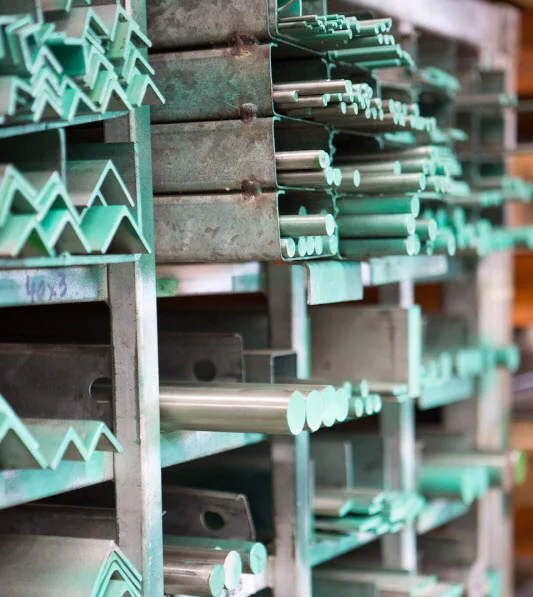
Diving into Grade 304 stainless steel
Grade 304 is one of the most commonly used stainless steels. A typical 304 stainless steel composition contains approximately 18% chromium and 8% nickel, which is why it is sometimes referred to as 18/8 stainless steel.
Its combination of corrosion resistance, durability, appearance and fabrication characteristics makes 304 suitable for an enormous range of general-purpose applications.
Typical uses include:
- Kitchen equipment and appliances
- Sinks and benches
- Food processing equipment
- Tanks and piping
- Architectural features
- Handrails and balustrades
- Fasteners
- Indoor and outdoor fixtures
- General fabrication.
For projects with limited exposure to salt and other aggressive chemicals, Grade 304 stainless steel offers an effective balance between performance and cost.
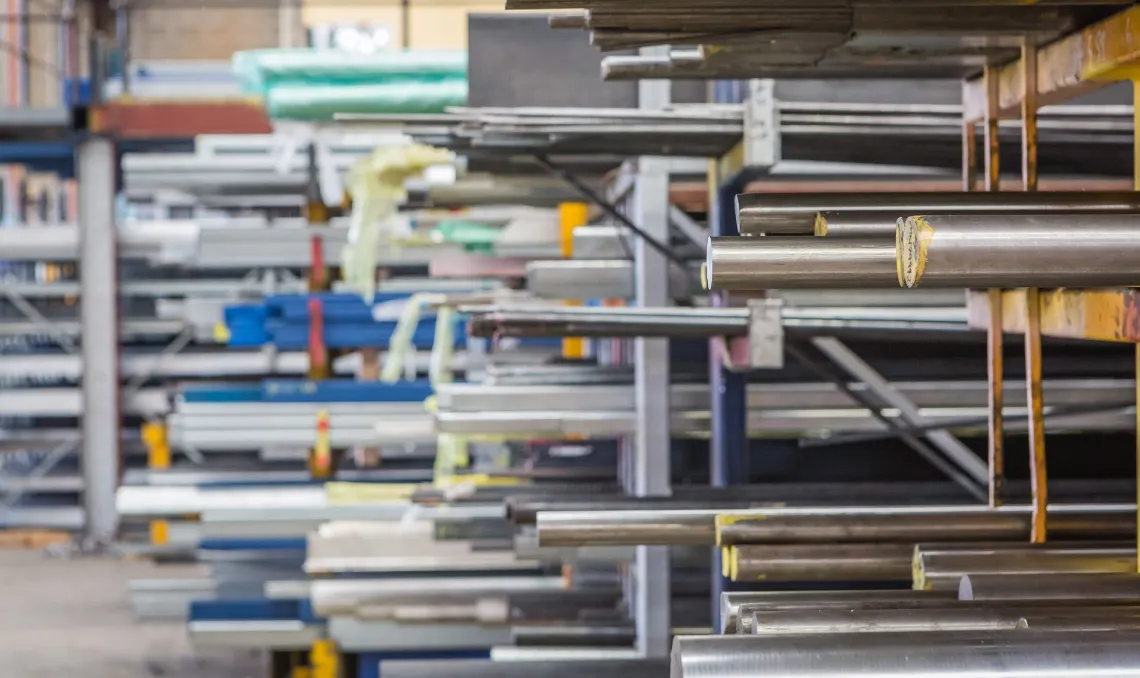
316 stainless steel
Grade 316 is a popular stainless steel and shares many characteristics with 304. The primary difference is the addition of approximately 2–3% molybdenum. Molybdenum improves stainless steel’s resistance to pitting and crevice corrosion, particularly in the presence of chlorides.
This makes 316 a practical alternative material for more aggressive environments. 316 is often referred to as marine-grade stainless steel, although the term can be misleading if interpreted to mean it is immune to corrosion. It is more corrosion-resistant than 304, but it can still corrode under the right conditions.
Typical applications include:
- Coastal architectural applications
- Marine fittings and equipment
- Food and beverage processing
- Chemical processing equipment
- Pharmaceutical equipment
- Medical equipment
- Tanks and piping
- Swimming pool environments
- Outdoor fixtures exposed to salt.
Its improved corrosion resistance is the principal reason for specifying 316 rather than 304.
The easiest way to understand the choice is to look at the environment in which the stainless steel will operate. Both grades contain chromium and nickel, and both provide good general corrosion resistance. Grade 316’s molybdenum content gives it additional protection against localised corrosion caused by chlorides.
Chlorides are found in seawater and salt spray, but exposure isn’t limited to ocean submersion. Coastal air, swimming pools, industrial processes, cleaning chemicals and other environments can also expose stainless steel to chlorides.
As chloride exposure increases, 316 becomes the recommended material.
In our next article, we’ll discuss the pros and cons of cost, the rust risk, and dive a little deeper into the “marine” grade naming and why 316 should not be mistaken for corrosion-proof.
If you’re unsure whether grade 304 or grade 316 is the best option for your project, contact your closest Edcon Steel depot. We offer the best advice and a competitive quote.
Need 304 or 316 for your next job?
Browse Edcon Steel’s range of stainless steel online. Custom cutting, click-and-collect and delivery available across Australia. Buy online or speak with the team at Brookvale, Blacktown, Revesby, Bathurst or Orange. for practical help in finding the right product.
FAQs
What is the main difference between 304 and 316 stainless steel?
The main difference is that 316 stainless steel contains molybdenum, while standard 304 does not. This gives 316 greater resistance to pitting and crevice corrosion, particularly in environments containing chlorides, such as salt solutions.
When should I use 304 stainless steel?
Grade 304 is suitable for many general-purpose applications where exposure to salt, chlorides and aggressive chemicals is limited. Common uses include kitchen equipment, food-processing equipment, architectural features, handrails, tanks, piping, and general fabrication.
When should I choose 316 stainless steel instead of 304?
Consider 316 stainless steel when the material will be exposed to higher levels of chlorides, such as coastal air, salt spray, swimming pools, or certain industrial and chemical environments. Its molybdenum content provides additional protection against localised corrosion.
Is 316 stainless steel completely resistant to rust and corrosion?
No. Although 316 is more corrosion-resistant than 304 and is often called ‘marine-grade’ stainless steel, it can still corrode under certain environmental and maintenance conditions.
Why doesn't stainless steel rust as easily as ordinary steel?
Stainless steel contains at least 10.5% chromium, which reacts with oxygen to create a thin protective oxide layer known as the passive layer. When sufficient oxygen is available, this layer can reform if the surface is scratched or damaged.
Can I order 304 and 316 stainless steel online from Edcon Steel and collect it?
Yes. Edcon Steel offers online ordering with click-and-collect, making it convenient to order stainless steel and collect it from your selected Edcon Steel location. Custom cutting and delivery options are also available for customers who need material prepared for their project.
Steel in Action: Projects & Know-How


17 June 2026 / Edcon Team
David’s Steel and Metal Creations
Long-time Edcon Steel customer and full-time farmer, Justin Press, has carved out a unique niche restoring antique wood-fired stoves to better-than-new condition.
Read More
21 August 2026 / Edcon Team
Guide to Steel Mesh and Perforated Products
At Edcon Steel, we stock a wide range of welded steel mesh, woven steel mesh, expanded steel mesh and perforated steel for builders, fabricators, tradies, manufacturers, and DIY customers.
Read More
22 September 2026 / Edcon Team
304 vs 316 Stainless Steel: Key Differences
<span style="font-weight: 400;">Steel tube are a practical choice for everything from building frames to furniture and architectural work. Here, we explore the key considerations when deciding between RHS, CHS, and RHS.</span>
Read More
Ready to Get Steel Your Way?
Store locations

Brookvale
Learn More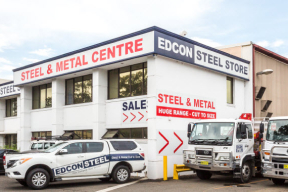
Revesby
Learn More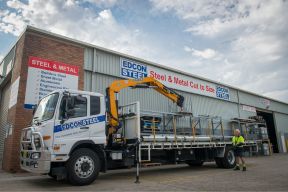
Blacktown
Learn More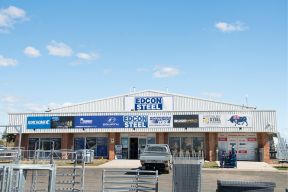
Bathurst
Learn More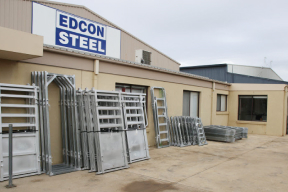
Orange
Learn More
Brookvale Head Office
Learn MoreLeading brands