Clean and maintain stainless steel
Last month we answered the question: Does stainless steel rust? In this article, we go a little deeper and debunk the myth that stainless steel is, in fact, stain-proof. While stainless steel is highly popular for its attractive finish, durability, and strength, it is not 100% stain- or corrosion-proof in certain environments.
Regular maintenance will ensure its longevity and appearance for decades, and in this article, we offer a few helpful tips to keep your stainless steel looking and performing at its optimum.
Browse 304 and 316 stainless steel
What is the primary cause of staining or rust in stainless steel?
Stainless steel contains chromium, which reacts with oxygen to form a thin, invisible protective film on the surface. Known as the passive layer, it provides corrosion resistance and can reform when the surface is clean and exposed to oxygen.
However, salt deposits, harsh chemicals and iron contamination can interfere with this protection. Scratches and trapped moisture increase the risk. When you see brown rust marks, they are not part of the protective layer. A brown rust mark indicates contamination or corrosion, and it is important to address it quickly. We’ll discuss how to do this later in this article.
Does the stainless steel grade matter?
Yes. Selecting the right grade for the environment is an important first step in reducing maintenance requirements. Grade 304 stainless steel (food grade) performs well in many indoor and relatively mild outdoor applications, including kitchen equipment and architectural fittings.
Grade 316 (marine grade) contains molybdenum, which improves resistance to chloride-related corrosion. It is often preferred in coastal environments.
Neither grade is completely maintenance-free. Even marine-grade stainless steel can develop staining when salt deposits accumulate, particularly on surfaces sheltered from rain.
A simple cleaning routine is recommended
When stainless steel is part of your outdoor features, a simple cleaning routine is recommended for basic maintenance.
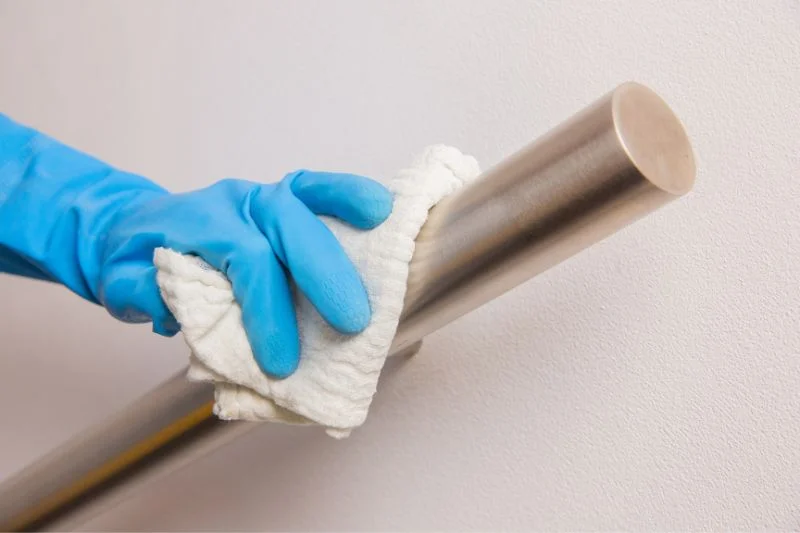
Remove any loose dirt. Wipe away dust and debris with a clean, soft cloth to avoid scratching the surface. Wash gently. Use warm water and a mild detergent with a non-abrasive sponge or cloth. On brushed finishes, wipe in the direction of the grain.
Rinse thoroughly. Remove detergent and loosened contaminants using clean water. Dry the surface. Finish with a soft, clean cloth to minimise water marks and lingering moisture. Inspect joints and sheltered areas for staining.
Your cleaning schedule depends on the environment, exposure and surface condition rather than a fixed timetable. Indoor surfaces can generally be maintained through normal household or workplace cleaning. Outdoor fittings should be inspected periodically, e.g every two to three months. Additionally, after a weather event in which dirt or salt has been blown through the air, it is recommended to thoroughly wash down your stainless steel.
Coastal installations may require monthly cleaning or more frequent attention, particularly where salt deposits are visible. If you manage an industrial building, a regular maintenance schedule should be implemented and tailored to the chemicals and contaminants present on site.

Removing stains and surface rust
Fingerprints and grease generally respond well to a mild detergent and warm water. Mineral deposits often require a cleaner specifically approved for use on stainless steel finishes. Light tea staining or surface rust can sometimes be removed with a non-abrasive stainless steel cleaner. Ensure you follow the manufacturer’s instructions, rinse thoroughly and avoid aggressive scrubbing.
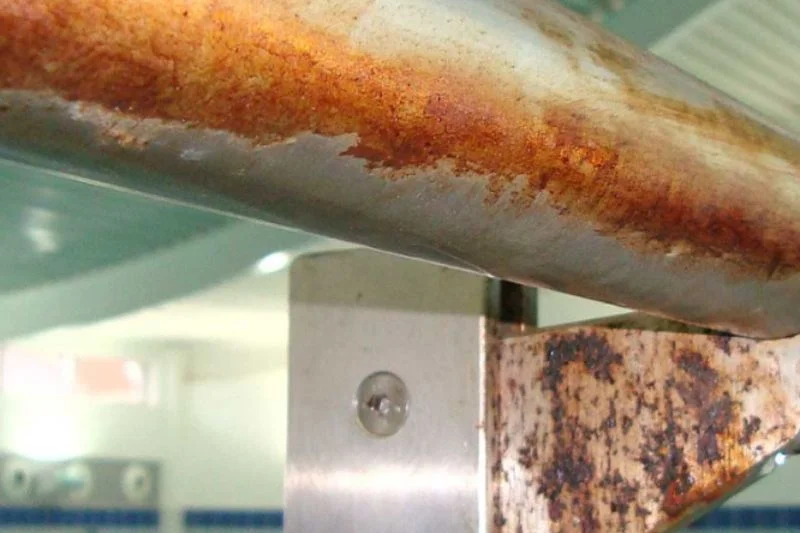
Tea staining appears as brown or reddish discolouration on stainless steel. It is a form of surface corrosion usually associated with coastal environments, where airborne salt settles on exposed metal. It is common on balconies and handrails. Surfaces protected from rainfall are vulnerable because salt deposits are not naturally washed away. Tea staining is common, but persistent staining should be investigated. Using marine-grade stainless steel and regular cleaning reduces the risk of tea staining.
Deep pitting, recurring corrosion or staining around welds may require professional assessment and specialist treatment. Cleaning alone cannot repair pitting.
What to avoid
Bleach and chloride-containing cleaners, hydrochloric acid, carbon steel wool, wire brushes and abrasive scouring products. These can damage the finish or introduce contamination that encourages rusting. Tools previously used on ordinary carbon steel can also transfer iron particles onto stainless steel.
Keeping your stainless steel features looking their best and lasting longer starts with choosing the right stainless steel grade for the environment it is used in and, secondly, ensuring it is professionally installed.
Fabrication also matters. Welding can affect local corrosion resistance, making appropriate post-weld cleaning and treatment important. Ultimately, stainless steel is low-maintenance, not maintenance-free. With a regular cleaning schedule and keeping an eye on salt and dirt deposits, your stainless steel will endure.
Edcon Steel is Australia’s leading steel supplier with over 18,000 products available online. We supply everything from aluminium and structural and stainless steel to brass, bronze, copper, mesh, and more.
With over 50 years in the industry, we know that having access to the right aluminium products, sizes, and specifications keeps projects on track. Whether you’re a tradie, fabricator, builder, or have a home project, we have the widest choice of materials.
Explore our stainless steel range.
FAQs
How often should stainless steel be cleaned?
The cleaning frequency depends on the environment and the level of exposure to contaminants. Indoor stainless steel generally requires routine cleaning, while outdoor installations should be inspected every two to three months. Coastal environments may require monthly cleaning or more frequent attention to remove salt deposits.
What is the best way to clean stainless steel?
Use warm water, a mild detergent and a soft, non-abrasive cloth or sponge. For brushed stainless steel, always wipe in the direction of the grain to avoid scratching the finish. Rinse thoroughly with clean water and dry with a soft cloth to prevent water marks.
Can stainless steel rust or develop stains?
Yes, stainless steel is corrosion-resistant but not completely rust-proof. Exposure to salt, harsh chemicals, trapped moisture and iron contamination can damage its protective passive layer, resulting in staining or corrosion. Regular cleaning and selecting the appropriate stainless steel grade help minimise these risks.
What is tea staining on stainless steel, and how can it be removed?
Tea staining is a brown or reddish surface discolouration commonly caused by airborne salt exposure, particularly in coastal environments. Light staining can often be removed using a non-abrasive stainless steel cleaner, followed by thorough rinsing. Regular maintenance and the use of grade 316 stainless steel can help reduce its occurrence.
What cleaning products should be avoided on stainless steel?
Avoid bleach, chloride-containing cleaners, hydrochloric acid, steel wool, wire brushes and abrasive scouring products. These can damage the protective surface or introduce iron contamination that encourages corrosion. Always use cleaning products specifically approved for stainless steel.
Is grade 316 stainless steel easier to maintain than grade 304?
Grade 316 stainless steel contains molybdenum, providing greater resistance to chloride-related corrosion than grade 304. This makes it particularly suitable for coastal and other environments where salt exposure is common. However, both grades require regular cleaning and maintenance to preserve their appearance and corrosion resistance.
Steel in Action: Projects & Know-How
24 November 2026 / Edcon Team
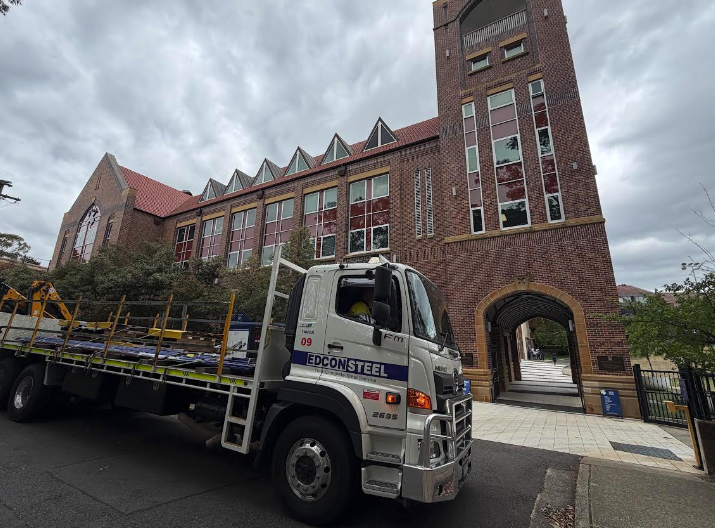
Edcon & Knox Grammar School partnership
Edcon Steel and Knox Grammar solved complex delivery challenges and supported students completing HSC major works.
Read More
17 June 2026 / Edcon Team
David’s Steel and Metal Creations
Long-time Edcon Steel customer and full-time farmer, Justin Press, has carved out a unique niche restoring antique wood-fired stoves to better-than-new condition.
Read More
23 November 2026 / Edcon Team
Clean and maintain stainless steel
Clean and maintain stainless steel, remove rust and tea staining, prevent corrosion, and protect it in Aussie conditions.
Read More
Ready to Get Steel Your Way?
Store locations

Brookvale
Learn More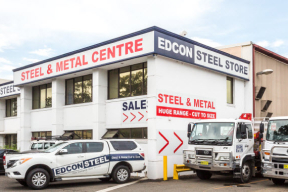
Revesby
Learn More
Blacktown
Learn More
Bathurst
Learn More
Orange
Learn More
Brookvale Head Office
Learn MoreLeading brands